8 months ago
Aleppo
History
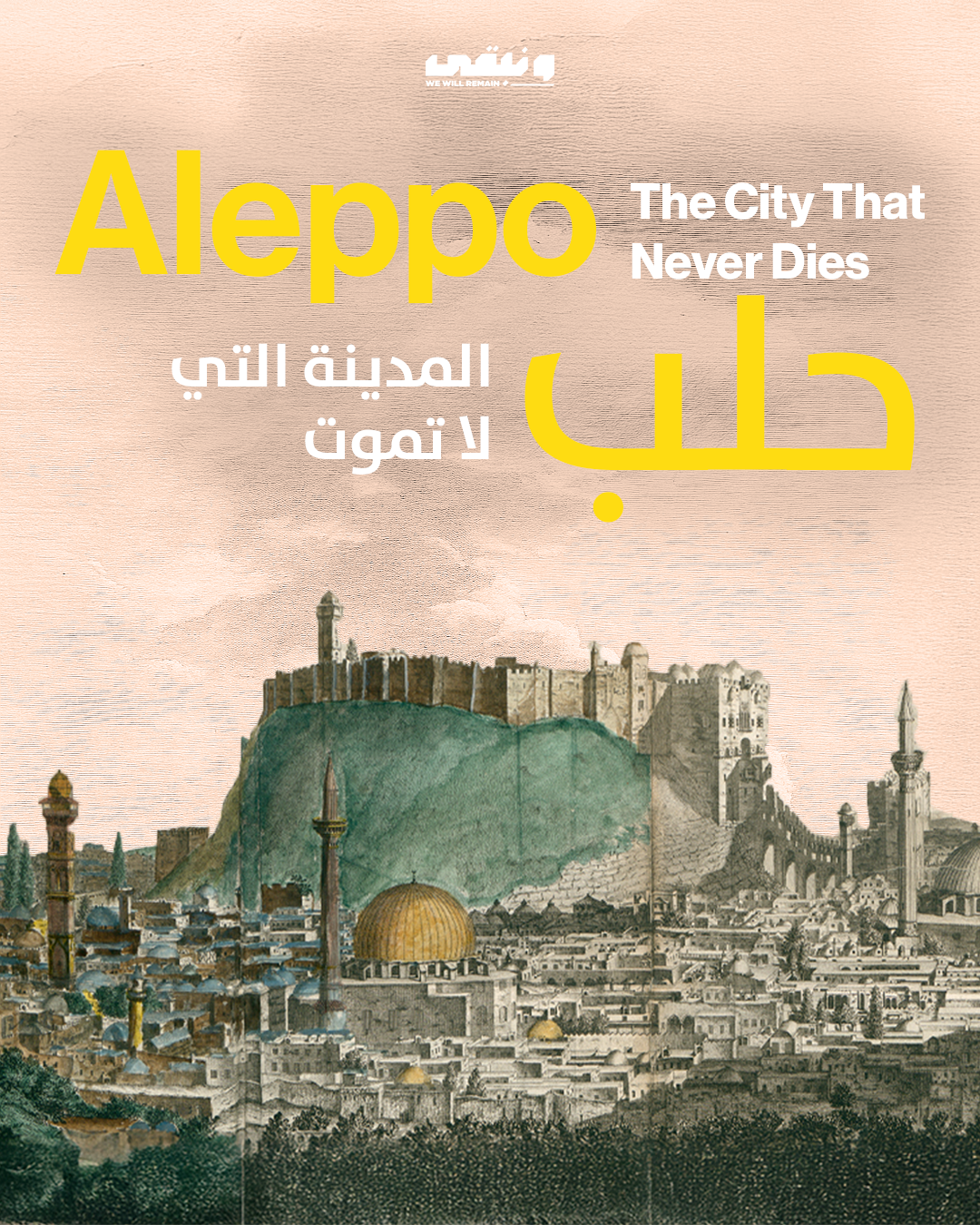
Aleppo: The City That Never Dies
Aleppo is one of the oldest continuously-inhabited cities in the world, a testament to resilience. Time and again, it has been destroyed by war, invasions, and natural disasters—yet each time, it was rebuilt. From ancient trade routes to its role as a cultural and commercial hub, Aleppo has adapted and thrived. Even after devastation from the Mongols, Tamerlane, and powerful earthquakes, its people preserved their heritage while shaping a prosperous future. Today, and despite the toll of war and the 2023 earthquake, Aleppo stands once more at the threshold of renewal. It is not merely a city that survives—it is a symbol of endurance, hope, and the unwavering power of rebirth.
10 months ago

Aleppo
Ethnicity
History
Dayfa Khatun: The Forgotten Kurdish Princess of Aleppo
Dayfa Khatun ruled Aleppo (1236-1242) at a time of political upheaval, navigating complex power dynamics and preserving the city’s stability. As a Kurdish princess from the Ayyubid dynasty, she navigated the complex political landscape of the time, using diplomacy and strategic alliances to maintain the city’s independence while avoiding costly military conflicts. Her leadership was instrumental in ensuring Aleppo’s stability and prosperity. Dayfa Khatun also made significant contributions to the city's cultural and architectural development, commissioning important schools and fortifications. Her reign challenges the commonly held belief that medieval Islamic politics was exclusive to men and underscores the longstanding presence of Kurds in Syria, who have been an integral part of its history for centuries. Dayfa's legacy reminds us of the crucial contributions women played in shaping the history of their time, despite being largely overlooked in historical narratives.
10 months ago

History
On the Culture of Criticism in Our Country: Do We Embrace It?!
Any problem or crisis can be resolved as long as we do not deny its existence, for when we disregard it, or are in denial of it, we set it up to become eternal, and we have had enough of eternal problems…
12 months ago

History
Threads of Heritage: Our Aghabani Tablecloth’s Journey from Damascus to Bonn
Aghabani tablecloths, embroidered with gold or silver threads, are a cherished part of Syrian culture, passed down through generations. Tracing back to Syrian-Ottoman history, Aghabani embroidered fabrics are particularly renowned among the men and women from Damascus and its outskirts, the city where this art has been practiced for over 200 years. Once gracing a Damascus dining table, this vintage beauty now adorns our home, symbolizing heritage, family, and the timeless art of Syrian craftsmanship.
Embroidering Aghabani textiles to make tablecloths or clothing is a skill passed down from generation to generation, mainly among Syrian women. Women bring their selected fabrics to woodblock printers that have a variety of designs to choose from. The selected designs are printed on the fabric with washable blue ink as a guide for the embroidery, which is usually done using a special Aghabani sewing machine with gold or silver viscose threads. The finished fabrics are then washed, ironed, and ready for sale in shops.
12 months ago

Diversity
History
Eternal Outsiders – the Roma in Syria
The term “gypsy” has been used throughout history in a pejorative way and is recognized by many members of the Dom community and researchers to be a derogatory term, particularly in Europe where they are known as the Roma people. Some members of Syrian society use the Arabic equivalent of the term, which is “Ghajar;” however, “Dom,” the equivalent of “Roma,” is also used.
As one of the ethnic groups that are most vulnerable to discrimination and persecution around the world, this community is considered a prominent ambiguous, diverse, and unrecognized group in Syria. They are known for practicing various professions, such as playing musical instruments, fortune telling, singing, and others; who are the Dom? So, what threat are we exactly facing? And what opportunity lies ahead? How can past mistakes be avoided? What is the most appropriate discourse style? This post seeks to address several issues that are directly related to ongoing social movement in Syria, in the hope of establishing a common ground on which everyone, as Syrians, can stand to engage in a meaningful discussion.
1 year ago

Faces of Wanabqa
History
First to Jet Across America & Father of a Queen: Najeeb Halaby’s Syrian-American Story
Najeeb Halaby was a Syrian-American pioneer in aviation with an extraordinary journey. He was the first to make a nonstop jet flight across the US and led the largest American airline. He was also the father of the first American-born Arab Queen. How much do you know about Najeeb Halaby?
2 years ago

Faces of Wanabqa
History
The Homsi Empress of Rome: Julia Domna
Julia Domna was born in Emesa, Syria (present-day Homs) around 160 A.D., descending from a ruling royal line. She became the wife of the Roman emperor Septimius Severus in 187
2 years ago

Damascus
History
Region
Damascus, Once the World Leading Centre of Astronomy
In the 14th century, Syria had two of the most notable astronomers who contributed to the world of astronomy and the Syrian Muslim community. Al Khalili came up with tables that would determine the times of the five prayers for Muslims in Damascus. On the other hand, Ibn Al Shatir created a sundial to install in the minaret of the Umayyad Mosque. Both Al Khalili and Ibn Al-Shatir left behind inventions and creations that would later influence the work and findings of world astronomers who came after them.
2 years ago

Aleppo
History
Region
Aleppo’s Destruction Through History
Aleppo has long been known for its commercial and military significance, strategically positioned between the Mediterranean Sea and Central Asia. However, this strategic importance came with many instances of Aleppo's destruction. So we ask ourselves, how many times can a city fall only to rise again?
2 years ago

History
Syria’s UNESCO World Heritage Sites
Syria’s historical heritage was not spared the ravages of the horrific war that has spanned over a decade. Today, Syria’s UNESCO World Heritage Sites stand in a heartbreaking state of neglect. Each site boasts its own complex historical mosaic, but now all of these sites stand as silent witnesses of our ancestors’ stories, awaiting the restoration they deserve. Despite Syria’s endless cultural and historical wealth, UNESCO currently recognizes only seven of its sites. Due to the absence of restoration efforts by the government, and because of inadequate global support, these sites are in danger of being lost to the sands of time.
2 years ago

Diversity
Ethnicity
History
Remembering the Armenian Genocide & the Legacy of Syrian Armenians
Armenian identity is greatly impacted by a deep wound. Today, we celebrate their presence, perseverance and legacy in Syria, and we also acknowledge that many Armenians have become refugees once more, fleeing and leaving behind traces of an identity that has become an inseparable part of Syria. Here, we briefly relay their story as emblems of resilience and cultural preservation that we, as Syrians, need. Due to past experiences, Armenians hold onto their culture and language firmly. In the diaspora, some formed quite exclusive social milieus. Despite this, Armenians in Syria were renowned for the extent of their assimilation as well as their fondness for the country and identification with it, unlike Armenian communities in other, primarily Arab, nations. Several reports about Armenian Syrians returning to Armenia as a result of the war in Syria, spoke about the extent of their struggle to blend into their homeland, as well as their efforts to preserve their ways of life (primarily) from Aleppo.